
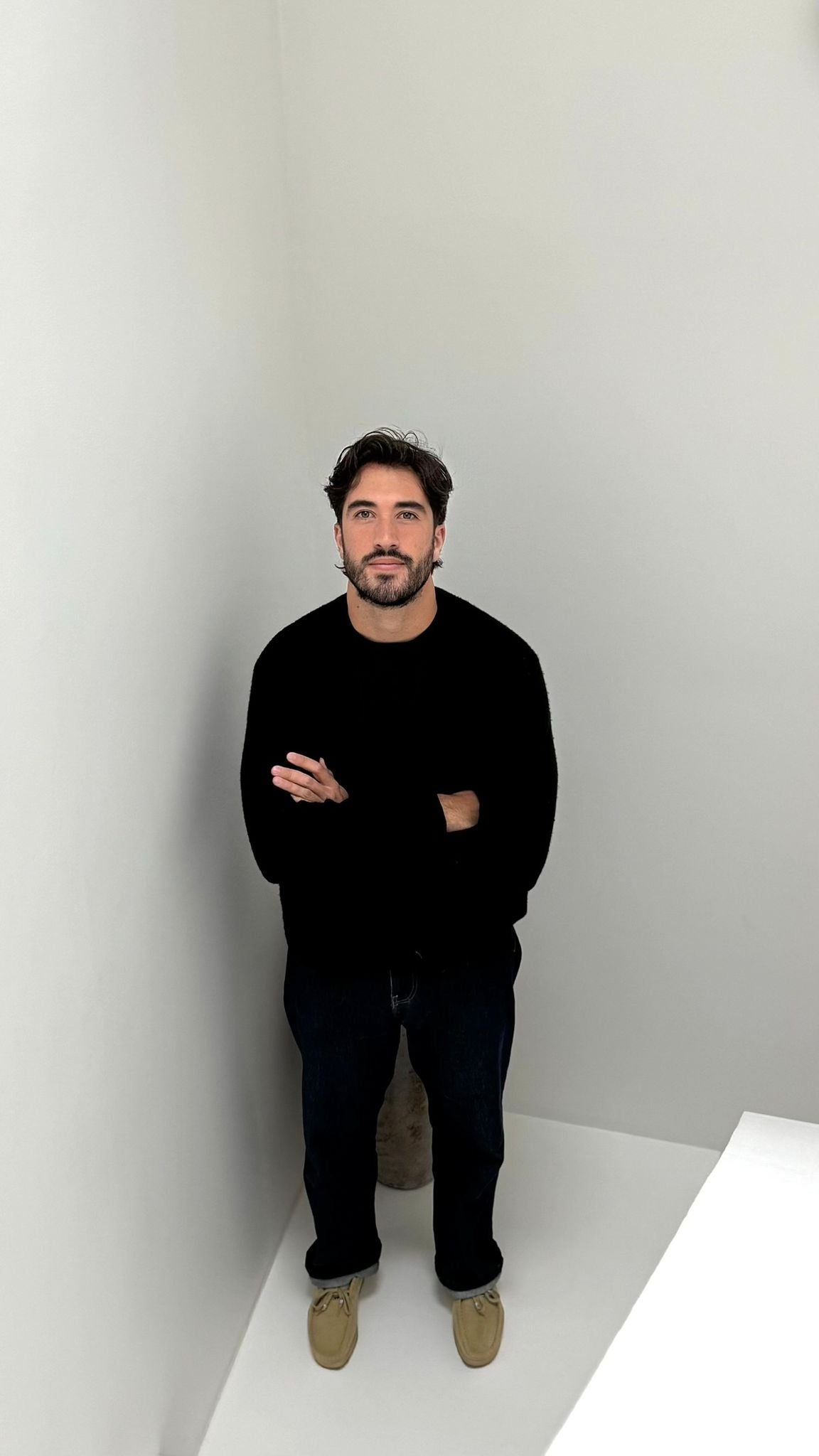
The artist
Sometimes we cry, sometimes we laugh. Life unfolds, scene after scene, like a film in which we are simultaneously the actor, the spectator, and the director. Our eyes capture these moments like a camera frozen on fragments of emotion and etch them into memory. At every step, we encounter faces, friends, loves, trials. Every detail of everyday life becomes a choice, an invisible fork in the road leading to a different reality. We all live in a multitude of parallel worlds, each playing its own part, each moving through a unique scene. What guides us? Emotion. Feeling. They are what dictate our choices, what color our memories, whether clear or dark, visible or buried. Many share their joys, but hide their pain. We carry certain memories like totems; we lock others away in chests we never dare open again.
And I, in this intimate chaos, have found a language. A way to freeze, to translate, to exorcise. Painting is my therapy. Colors, gestures, textures allow me to transform inner turmoil into visible territory. Each canvas becomes a mental map, a landmark, a trace of a passage. In many spiritual traditions, the West is more than a cardinal point: it is a symbolic direction, the place of the end, of the invisible, of the beyond. In my work, I systematically encircle the word “WEST,” as if circling a secret or an inner truth. It is not an escape that I paint, but a quest for orientation. The West becomes an emotional space, an intimate destination we try to reach.
The faces I draw are raw, distorted, expressive; they embody this tension between what we feel and what we show, between being and image. Words, meanwhile, waver: affirmed, crossed out, uncertain. This is not denunciation; it is inner cartography. The visual language is deliberately instinctive, almost childlike, to let instinct, urgency, and emotion speak. What I seek to paint is not “beautiful” in the classical sense, but visceral. Authentic. True. It is the film of an inner life, projected onto the canvas. It is my way of walking west